Breaking News
Breaking News
from Washington and beyond

Why Trump Suddenly Dropped His Latest Strait of Hormuz Plan

A major Gulf ally forced Donald Trump to pump the brakes on Project Freedom.

Donald Trump speaks while sitting at his desk in the Oval Office
Kent NISHIMURA/AFP/Getty Images

Saudi Arabia reportedly derailed Donald Trump’s short-lived escort mission in the Strait of Hormuz.

Trump unveiled Project Freedom on Sunday, revealing the U.S. would help ships travel through the Strait of Hormuz. On Tuesday, he suddenly announced the plan had been immediately put on hold in the hopes of finally cutting a peace deal with Iran.

But Trump only called it quits after Saudi Arabia barred the U.S. military from using its air bases or flying through its airspace, two U.S. officials told NBC News Wednesday.

Officials in Saudi Arabia were surprised by Trump’s announcement of Project Freedom, and not in a good way, the officials told NBC News. Leadership responded by telling the U.S. military it could no longer fly aircraft from the Prince Sultan Airbase, or fly through Saudi airspace to support the effort.

Trump spoke with Saudi Crown Prince Mohammed bin Salman, but to no avail, the U.S. officials said. As a result, Project Freedom has been put on hold while the president scrambles to restore access to critical airspace.

When asked whether Project Freedom had come as a surprise, a Saudi source told NBC News: “The problem with that premise is that things are happening quickly in real time.”

Meanwhile, a White House official said in a statement that “regional allies were notified in advance.”

U.S. allies weren’t the only ones caught unaware by Trump’s changing plans. His own Cabinet members were singing the praises of Project Freedom just hours before the president chucked it in the waste bin.
Democrats Probe How Much Trump Pardon Recipients Paid to Get Free

Congressional Democrats have launched an investigation into the “pay to play” scheme.

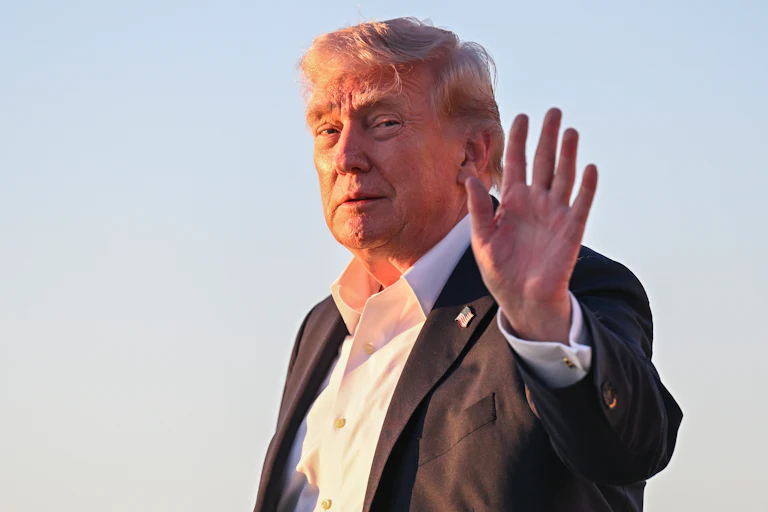
Donald Trump waves
Roberto Schmidt/Getty Images

Democrats in Congress are investigating whether President Trump’s pardons came with a payout for him.

CBS News reports that Democratic Representatives Dave Min and Raul Ruiz, as well as Senator Peter Welch, have sent letters to over a dozen of the people Trump has pardoned or given some form of clemency, investigating whether they received the clemency “through intermediaries, financial contributions, or other forms of influence.”

The letters note that many of Trump’s pardons have gone to his allies, and the lawmakers asked pardon recipients for contracts showing how much money they paid to lobbyists, social media influencers, lawyers, and others to persuade Trump.

The lawmakers said in the letters that Trump’s pardons and clemency are “depriving victims of compensation and justice,” pointing out an analysis from California Governor Gavin Newsom’s office that found the president’s actions nullified almost $2 billion in recovered money from Medicare and tax fraud, as well as victim repayment.

If the recipients of the letters don’t “respond, they run the risk of highlighting themselves—of being the subjects of future congressional investigations and creating more of a target on their backs for potential further criminal prosecutions,” Min told CBS. He added that Trump’s pardons send the message that people can “get around the justice system,” which “gets to the heart of what is wrong with America right now under this administration.”

Democrats are investigating pardoned financial criminals like Changpeng Zhao, who made billions from cryptocurrency before pleading guilty to money laundering, and Trevor Milton, who was sentenced to four years in prison for securities and wire fraud charges in 2023 for defrauding investors with his electric truck company, Nikola.

Milton owed millions of dollars to his victims, and he’s one of many pardoned by Trump who are now off the hook for the restitution they owe. But since Democrats don’t control Congress right now, they don’t have subpoena power, so these letters carry little—if any—legal weight. In the meantime, Trump can collect rewards from all of the people he has pardoned.

DOJ Investigates Suspiciously Timed Oil Trades in Middle of War

The Department of Justice says it’s looking into trades that happened right before government officials made major announcements about the war.

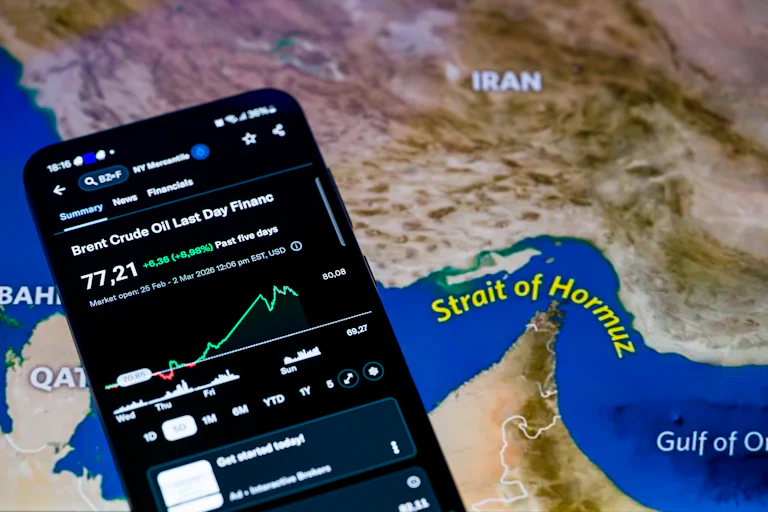
The Brent crude oil price chart from the past week is displayed on a mobile screen, with a map of the Strait of Hormuz in the background
Jonathan Raa/NurPhoto/Getty Images

The Justice Department is investigating potential insider trading related to the skyrocketing oil prices caused by the U.S.-Israeli war on Iran and Lebanon. The department is specifically looking into at least four instances where traders made over $2.6 billion betting that the price of oil would fall moments before it did, according to sources who spoke with ABC News.

According to the London Stock Exchange, traders bet over $500 million that oil prices would drop on March 23, just 15 minutes before Trump announced he’d be pausing his planned attacks on Iran’s power centers. On April 7, traders bet $960 million on oil prices falling. A few hours later, Trump announced a temporary ceasefire. Ten days later, Iran’s Foreign Minister Abbas Araghchi went on social media to state that the Strait of Hormuz was open—and traders bet $760 million on falling oil prices just 20 minutes before he did. On April 21, traders once again somehow had the awareness to bet $760 million that oil prices would fall just 15 minutes before Trump announced a ceasefire extension.

All signs point to someone with insider knowledge using this erratic war to enrich themselves—something the Trump administration has been accused of multiple times.

In January, an unknown Polymarket user bet on the U.S. invading Venezuela and Venezuelan President Nicolás Maduro being forced out of leadership by January 31, betting more than $33,000 while the odds were only at 6 percent. That trader made $400,000 in less than 24 hours. It was later revealed that the user was a U.S. soldier who was part of the raid on Maduro, and he was charged with “unlawful use of confidential government information for personal gain.”

And last year, Trump proclaimed on Truth Social that “THIS IS A GREAT TIME TO BUY!!! DJT,” a mere four hours before announcing a 90-day pause on most retaliatory tariffs except for those on China, causing stocks to shoot up.

Observant Americans shouldn’t get their hopes up regarding any actual consequences coming from the probe, as it’s being led by a compromised, biased Justice Department.

Campaign Staff Are Making Bank by Betting on Own Candidates

They’re using internal, non-public information to place the bets.

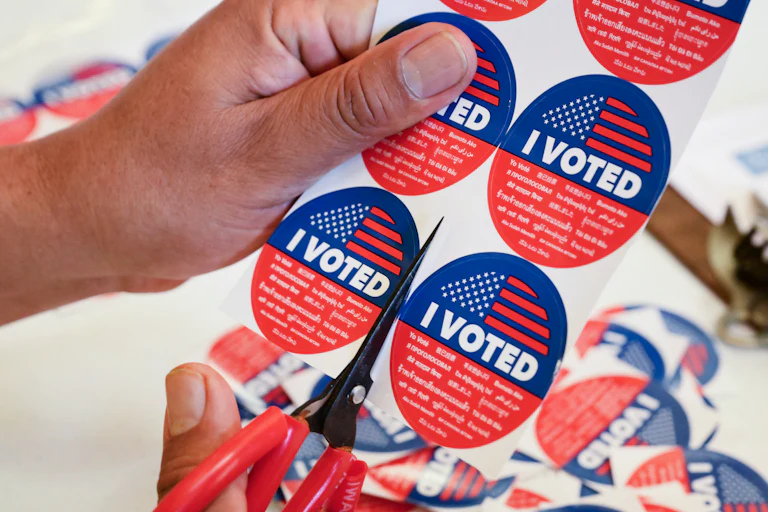
A person cuts up a sheet of "I voted" stickers with a pair of scissors
FREDERIC J. BROWN/AFP/Getty Images

Political insiders have found a new way to make cash off of election season.

Betting on the success or failure of political candidates has effectively become commonplace in the industry, NPR reported Thursday, with campaign staffers making thousands of dollars from their respective candidates.

One staffer working on a statewide campaign in the South told NPR how an external poll, shared prior to its release with their team, launched a wave of internal bets in support of their candidate. Internal campaign data showed their candidate faring worse than the external poll, but that didn’t matter.

“Myself and others started placing bets before that poll came out,” the staffer told NPR on the condition of anonymity. “And then, sure enough as soon as that poll came out, the stock went up and everybody made money.”

There’s apparently no shame in the game, despite recent attempts by online prediction markets to curb the behavior. In late April, the prediction market Kalshi—better known for sports betting—banned and fined several political candidates after a company probe found they had bet on themselves.

“Because you have all this information and knowledge that isn’t publicly available yet, it’s almost foolish not to bet on it before it’s made public,” the staffer said.

The practice has raised questions about the ethics and legality of campaign betting, and what has become known as “political insider trading.”

The process is as easy as can be imagined: An insider will become privy to nonpublic polls related to the campaign, and use the unreleased odds from the polls to inform their bets on sites like PredictIt or Polymarket. If the new poll indicates better odds of success than the odds on the website, they’ll buy low with what’s known as an event contract—knowing that the poll, once released, will raise their candidate’s favorability.

“The most I’ve ever made is thousands,” the staffer told NPR.

Read about prediction markets:

Kash Patel Lost It When Personalized Bourbon Bottle Went Missing

“It turned into a sh*tshow,” a former agent said of the scene.

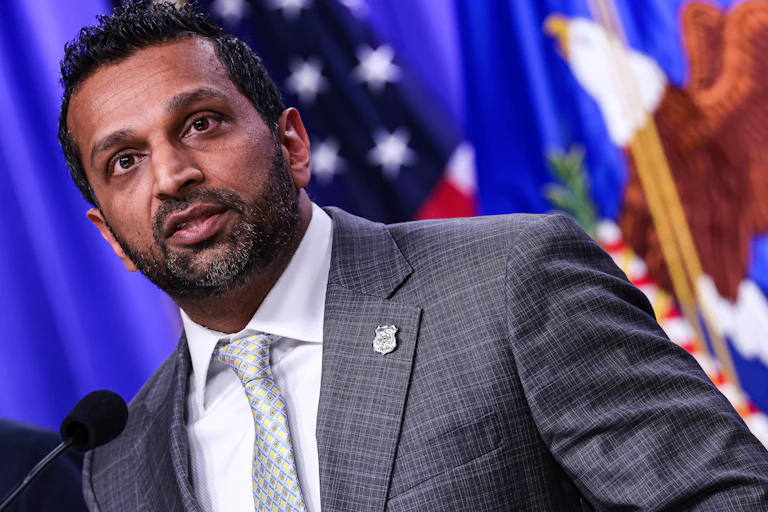
FBI Director Kash Patel speaks at a podium
Valerie Plesch/Bloomberg/Getty Images

FBI Director Kash Patel reportedly had a major meltdown when he lost one of his personalized bottles of bourbon.

The Atlantic reported Wednesday that Patel typically travels with a supply of personalized bottles of Woodford Reserve bourbon, branded with the words “Kash Patel FBI Director,” and a rendering of the FBI shield, surrounded by a band that features his favored spelling of his first name: “Ka$h.” Some of the bottles also include his signature and the number nine, a likely reference to Patel’s place in the lineage of FBI directors.

Patel and his team reportedly traveled with at least one case of bourbon to the FBI’s training facility in Quantico, Virginia, in March for a “training seminar” taught by Ultimate Fighting Championship athletes. At least one of the bottles of bourbon went missing, causing Patel to “lose his mind,” according to clients of Kurt Siuzdak, a retired agent who has assisted FBI agents with legal issues, who spoke with The Atlantic.

Multiple agents contacted Siuzdak for legal guidance after Patel threatened to polygraph and prosecute staff over the missing bottle. “It turned into a shitshow,” Siuzdak said. Other attorneys told the magazine they’d received similar calls from FBI employees concerned about Patel’s bourbon bottles.

Siuzdak told the magazine that FBI agents “have a duty to disclose wrongdoing,” but it had become clear that if one made allegations against Patel, “you’re screwed.”

“I tell people to run from him,” Siuzdak, who had a more than 20-year career at the FBI, said of the advice he gives current FBI employees.

The Atlantic published this story the same day it was reported that the FBI was investigating the article’s author, Sarah Fitzpatrick, for a report she wrote last month that Patel was known to drink in excess, routinely delayed time-sensitive operations, and was often unreachable.

After The Atlantic published that first story, Patel filed a $250 million defamation suit against the publication, claiming the article was “replete with false and obviously fabricated allegations designed to destroy Director Patel’s reputation and drive him from office.” Fitzpatrick said even more sources reached out to her to discuss Patel’s leadership afterward—and clearly they have a lot to say.