Breaking News
Breaking News
from Washington and beyond

DOJ Investigates Suspiciously Timed Oil Trades in Middle of War

The Department of Justice says it’s looking into trades that happened right before government officials made major announcements about the war.

The Brent crude oil price chart from the past week is displayed on a mobile screen, with a map of the Strait of Hormuz in the background
Jonathan Raa/NurPhoto/Getty Images

The Justice Department is investigating potential insider trading related to the skyrocketing oil prices caused by the U.S.-Israeli war on Iran and Lebanon. The department is specifically looking into at least four instances where traders made over $2.6 billion betting that the price of oil would fall moments before it did, according to sources who spoke with ABC News.

According to the London Stock Exchange, traders bet over $500 million that oil prices would drop on March 23, just 15 minutes before Trump announced he’d be pausing his planned attacks on Iran’s power centers. On April 7, traders bet $960 million on oil prices falling. A few hours later, Trump announced a temporary ceasefire. Ten days later, Iran’s Foreign Minister Abbas Araghchi went on social media to state that the Strait of Hormuz was open—and traders bet $760 million on falling oil prices just 20 minutes before he did. On April 21, traders once again somehow had the awareness to bet $760 million that oil prices would fall just 15 minutes before Trump announced a ceasefire extension.

All signs point to someone with insider knowledge using this erratic war to enrich themselves—something the Trump administration has been accused of multiple times.

In January, an unknown Polymarket user bet on the U.S. invading Venezuela and Venezuelan President Nicolás Maduro being forced out of leadership by January 31, betting more than $33,000 while the odds were only at 6 percent. That trader made $400,000 in less than 24 hours. It was later revealed that the user was a U.S. soldier who was part of the raid on Maduro, and he was charged with “unlawful use of confidential government information for personal gain.”

And last year, Trump proclaimed on Truth Social that “THIS IS A GREAT TIME TO BUY!!! DJT,” a mere four hours before announcing a 90-day pause on most retaliatory tariffs except for those on China, causing stocks to shoot up.

Observant Americans shouldn’t get their hopes up regarding any actual consequences coming from the probe, as it’s being led by a compromised, biased Justice Department.
Campaign Staff Are Making Bank by Betting on Own Candidates

They’re using internal, non-public information to place the bets.

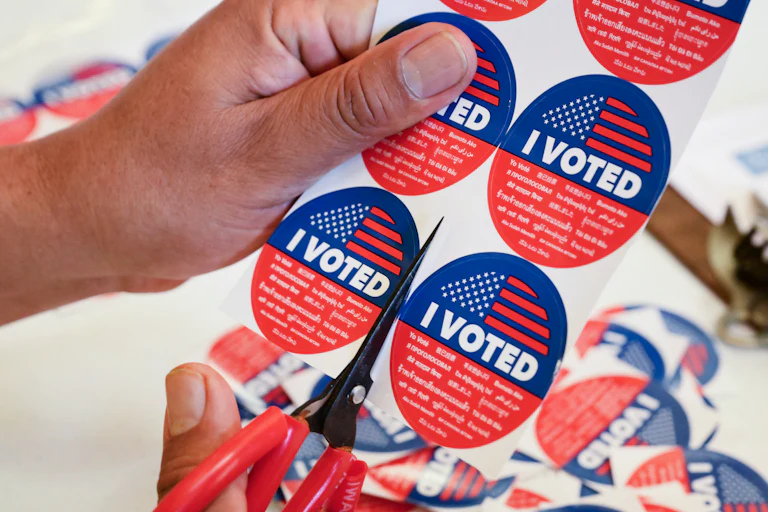
A person cuts up a sheet of "I voted" stickers with a pair of scissors
FREDERIC J. BROWN/AFP/Getty Images

Political insiders have found a new way to make cash off of election season.

Betting on the success or failure of political candidates has effectively become commonplace in the industry, NPR reported Thursday, with campaign staffers making thousands of dollars from their respective candidates.

One staffer working on a statewide campaign in the South told NPR how an external poll, shared prior to its release with their team, launched a wave of internal bets in support of their candidate. Internal campaign data showed their candidate faring worse than the external poll, but that didn’t matter.

“Myself and others started placing bets before that poll came out,” the staffer told NPR on the condition of anonymity. “And then, sure enough as soon as that poll came out, the stock went up and everybody made money.”

There’s apparently no shame in the game, despite recent attempts by online prediction markets to curb the behavior. In late April, the prediction market Kalshi—better known for sports betting—banned and fined several political candidates after a company probe found they had bet on themselves.

“Because you have all this information and knowledge that isn’t publicly available yet, it’s almost foolish not to bet on it before it’s made public,” the staffer said.

The practice has raised questions about the ethics and legality of campaign betting, and what has become known as “political insider trading.”

The process is as easy as can be imagined: An insider will become privy to nonpublic polls related to the campaign, and use the unreleased odds from the polls to inform their bets on sites like PredictIt or Polymarket. If the new poll indicates better odds of success than the odds on the website, they’ll buy low with what’s known as an event contract—knowing that the poll, once released, will raise their candidate’s favorability.

“The most I’ve ever made is thousands,” the staffer told NPR.

Read about prediction markets:

Kash Patel Lost It When Personalized Bourbon Bottle Went Missing

“It turned into a sh*tshow,” a former agent said of the scene.

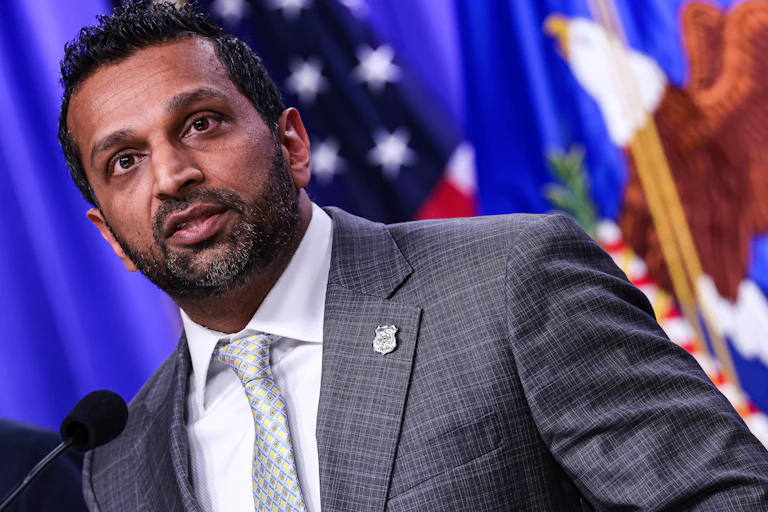
FBI Director Kash Patel speaks at a podium
Valerie Plesch/Bloomberg/Getty Images

FBI Director Kash Patel reportedly had a major meltdown when he lost one of his personalized bottles of bourbon.

The Atlantic reported Wednesday that Patel typically travels with a supply of personalized bottles of Woodford Reserve bourbon, branded with the words “Kash Patel FBI Director,” and a rendering of the FBI shield, surrounded by a band that features his favored spelling of his first name: “Ka$h.” Some of the bottles also include his signature and the number nine, a likely reference to Patel’s place in the lineage of FBI directors.

Patel and his team reportedly traveled with at least one case of bourbon to the FBI’s training facility in Quantico, Virginia, in March for a “training seminar” taught by Ultimate Fighting Championship athletes. At least one of the bottles of bourbon went missing, causing Patel to “lose his mind,” according to clients of Kurt Siuzdak, a retired agent who has assisted FBI agents with legal issues, who spoke with The Atlantic.

Multiple agents contacted Siuzdak for legal guidance after Patel threatened to polygraph and prosecute staff over the missing bottle. “It turned into a shitshow,” Siuzdak said. Other attorneys told the magazine they’d received similar calls from FBI employees concerned about Patel’s bourbon bottles.

Siuzdak told the magazine that FBI agents “have a duty to disclose wrongdoing,” but it had become clear that if one made allegations against Patel, “you’re screwed.”

“I tell people to run from him,” Siuzdak, who had a more than 20-year career at the FBI, said of the advice he gives current FBI employees.

The Atlantic published this story the same day it was reported that the FBI was investigating the article’s author, Sarah Fitzpatrick, for a report she wrote last month that Patel was known to drink in excess, routinely delayed time-sensitive operations, and was often unreachable.

After The Atlantic published that first story, Patel filed a $250 million defamation suit against the publication, claiming the article was “replete with false and obviously fabricated allegations designed to destroy Director Patel’s reputation and drive him from office.” Fitzpatrick said even more sources reached out to her to discuss Patel’s leadership afterward—and clearly they have a lot to say.

Alabama Republicans Vote to Pass New Map as Tornado Sirens Blare

Local lawmakers made sure to pass the gerrymandering bill even after the Capitol began to flood.

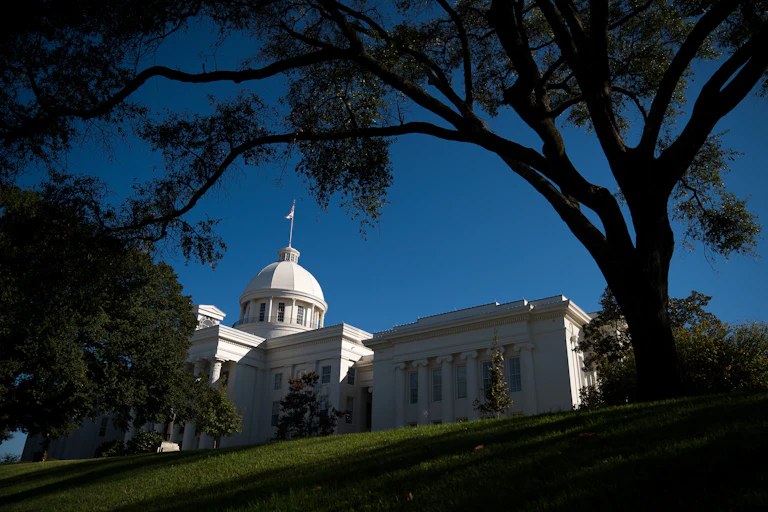
Alabama state Capitol
Drew Angerer/Getty Images
Alabama state Capitol

Tornado sirens and flooding in Alabama’s state Capitol building couldn’t stop Republican lawmakers from forcing through two redistricting bills in their state legislature Wednesday.

The debate ran for five hours over House Bill 1, which allows for a new special election if federal courts lift an injunction and allow the state to redraw its congressional districts before 2030. A similarly long debate appeared certain for the other bill, Senate Bill 1, which would redraw two state Senate districts. But then, a storm with a tornado watch led to sirens and flooding in the building.

BlueSky screenshot Brian Lyman ‪@brianlyman.bsky.social‬ Alabama Legislature is meeting on redistricting; we are under a tornado watch, and it’s flooding in the building. These metaphors are too on the nose.

Water flooded into the first floor of the building at about 5 p.m. Central Time. The parking deck behind the statehouse, where staffers and lawmakers leave their cars, was also flooded. The storm initially didn’t stop proceedings, but when the fire alarm in the building went off, debate was quickly stopped and the lawmakers called for a vote.

Both bills faced heavy opposition from Democrats, who warned the legislation would stifle the political power of Alabama’s Black population.

“This body continues to find more ways to make voting more difficult, more ways to suppress the vote and more ways to dilute the power of the Black vote,” said Democratic state Representative Adline Clarke. “Make no mistake, that’s what H.B. 1 would do, and it’s a tragic step backwards for Black Alabama voters. But we’ve been here before, and we will not give up this fight.”

H.B. 1 would only take effect if federal courts reverse 2023 and 2025 rulings that Alabama’s legislature violated the Voting Rights Act. Last week, the U.S. Supreme Court gutted the landmark civil rights legislation, opening the door for the courts to review those rulings. The Supreme Court decision has led to states across the Republican-led South to rush through redistricting that disenfranchises their Black populations.

Protesters gathered outside of the state Senate to object to S.B. 1, chanting, “We know you want us to leave, but we shall not be moved. Just like a tree, planted by the waters, we shall not be moved. This is the people’s house. We built this house. This is our house.”

Trump Team Privately Panicking Over Elections Disaster He Created

The Trump administration knows that Americans will blame him for skyrocketing prices.

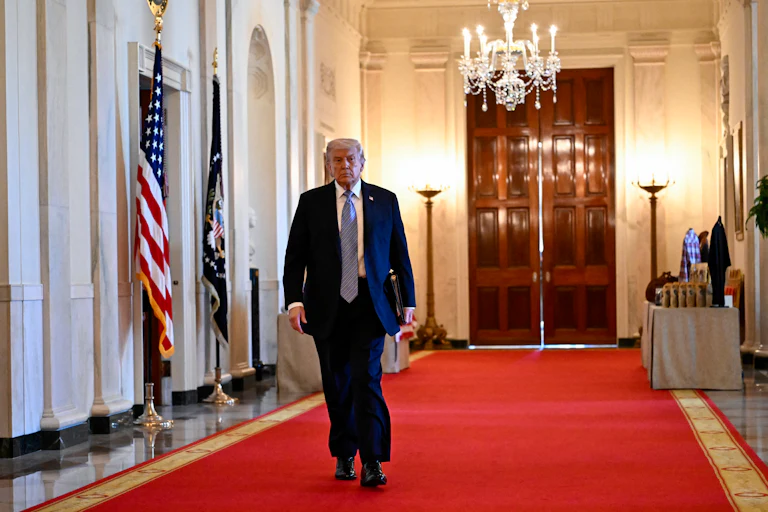
Donald Trump walking in the White House
Kent NISHIMURA/AFP/Getty Images

The Trump administration is in panic mode as jet fuel prices continue to soar due to the U.S.-Israeli joint war on Iran and Lebanon, with the president’s advisers pushing him to end the war before summer, according to The Wall Street Journal

Jet fuel has become twice as expensive since the beginning of the war, and prices show no signs of falling. That’s causing airlines to add billions more in expenses and ticket prices to try to counteract the effects of the war—meaning the consumer will suffer. Skyrocketing fuel prices even caused Spirit Airlines to declare bankruptcy and shut down last week, even though Republicans blame the Biden administration. 

The vast majority of Americans are suffering at the pump, the airport, or both—and they’re correctly blaming it on Trump. Trump and his Cabinet have continuously downplayed the negative impacts the war is having on fuel prices, with the president stating that these high prices are “a very small price to pay for getting rid of a nuclear weapon from people that are really mentally deranged.” Americans don’t see it that way, especially if it means their plans get canceled. If the senseless death, destruction, and displacement in Iran and Lebanon weren’t enough to catalyze people against Trump’s war, paying hundreds of dollars for a vacation ticket might.