Breaking News
Breaking News
from Washington and beyond

Pretty Much Everyone Hates Ron DeSantis Now

Struggling in the Republican presidential primary, the Florida governor also has growing problems in his home state.

Photo by Joe Raedle/Getty Images

Ron DeSantis’s struggles on the campaign trail have eroded his influence back home in Florida, and even once-close allies are revolting against his control.

DeSantis was crowned early on as the natural successor to Donald Trump: A demagogic culture warrior, but younger and more disciplined—he was a figure who could appeal, in theory, both to MAGA diehards and Trump skeptics. When he launched his campaign, he was fresh off a series of victories at home. The Republican-controlled Florida state legislature had helped him pass multiple draconian measures limiting LGBTQ rights, educational freedom, and abortion access. While candidates backed by Trump struggled in the 2022 midterms, DeSantis romped to victory, winning by nearly 20 points.

But he has plummeted dramatically in the polls recently, and Florida Republicans are ready to move on, Politico reported Friday.

“You don’t get the assumption they are measuring drapes anymore,” a Republican consultant in Tallahassee told Politico, speaking anonymously. “They are waiting for him to drop out.”

And even if DeSantis does drop out and return to his gubernatorial duties, he may find his power in the Sunshine State has been dramatically curbed.

Republican state Representative Daniel Perez told his colleagues this week to be careful going forward, warning that the “problem with wielding the power of government like a hammer is that the people start looking like nails.”

Perez has denied that he was indirectly speaking to DeSantis, but another Tallahassee lobbyist said it was a signal to the governor that the legislature would no longer act as a “conveyor belt” for whatever laws he wants.

Meanwhile, the state Republican Party revoked a DeSantis-backed pledge to endorse whoever the Republican presidential nominee is. Front-runner Donald Trump’s supporters have been calling for such a reversal.

At Pasco-Hernando State College, the board of trustees—stacked with DeSantis allies—passed over a DeSantis official for the college president.

Even one of DeSantis’s former biggest donors, billionaire Ken Griffin, has yet to back DeSantis for president. Griffin cited the governor’s weird feud with Disney and said he doesn’t know who DeSantis is trying to win over.

“There’s no love lost between the legislature and DeSantis,” a third Tallahassee lobbyist told Politico. “They are waiting long enough to see the king drained of all his power. It’s a slow-motion coup.”
More on Ron DeSantis's Woes

Elon Musk Reportedly Lied About How Many Monkeys His Neuralink Implant Killed

Musk insists that no monkeys died in trials and that the brain implant is ready for human trials. A horrifying new WIRED report suggests otherwise.

Nathan Laine/Bloomberg/Getty Images

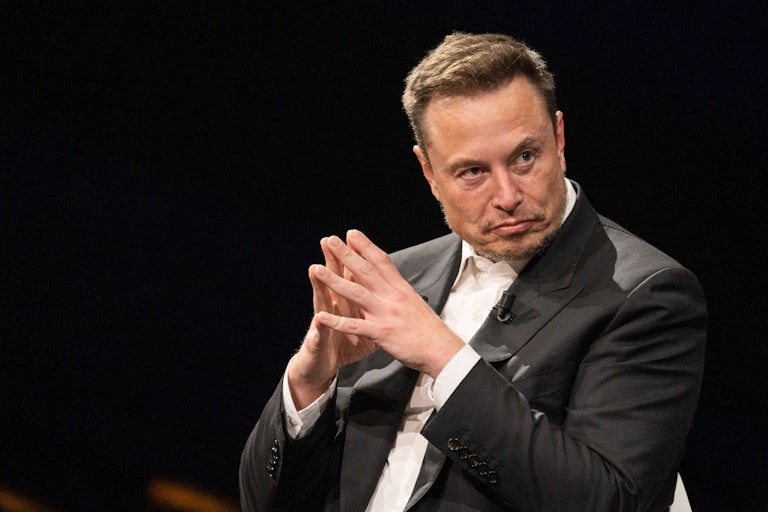
Medical implant company Neuralink killed at least a dozen monkeys through animal testing, after first subjecting the primates to horrifying conditions, despite founder Elon Musk’s claims otherwise, according to a new WIRED report.

Musk announced Wednesday that Neuralink was ready to start human trials, despite widespread concerns about the effects of the implant and the company’s animal testing methods. But Musk had assured his followers 10 days earlier that no monkey test subjects died due to the implant. Instead, Musk insisted that the company had conducted its early tests on monkeys that were already close to death.

Except, it turns out that wasn’t the case. That same day, WIRED published a report that blew Musk’s claim to bits.

Musk’s statement is “ridiculous” and even a “straight fabrication,” a former Neuralink employee told WIRED, speaking anonymously. “We had these monkeys for a year or so before any surgery was performed.”

Neuralink’s monkeys were also fairly young, according to a doctoral candidate who is working at the California National Primate Research Center, which helped Neuralink conduct its tests. The candidate, also speaking anonymously, told WIRED that “it’s hard to imagine these monkeys, who were not adults, were terminal for some reason.”

Veterinary records show that as many as a dozen monkeys had to be euthanized after they were implanted with Neuralink devices because they developed agonizing complications, WIRED reported Wednesday. The monkeys’ issues included bloody diarrhea, partial paralysis, and cerebral edema, or “brain swelling.”

One monkey dislodged an implant connector because it kept yanking on the device. When veterinarians conducted surgery to repair the device, they found the implant area had become infected—and couldn’t be healed because the device was blocking their access.

Another monkey kept picking at her implant until it bled, and would repeatedly press her head to the floor in a sign of pain or discomfort. She became lethargic, opting to lie on the floor of her cage and hold hands with her roommate, until she saw lab workers. Then she would start to shake uncontrollably. After she was euthanized, a necropsy revealed the implant had severely damaged her brain.

Yet another monkey had to be euthanized after his implant screws became so loose that the whole device could “easily be lifted out,” according to the necropsy report. The report also said that “the failure of this implant can be considered purely mechanical.”

Neuralink is already under two federal investigations over its animal testing practices. The Department of Agriculture opened an investigation in December 2022. At the time, Reuters reported that Neuralink had killed about 1,500 animals during testing since 2018.

The Department of Transportation opened another investigation in 2023 over allegations that Neuralink was transporting antibiotic-resistant pathogens in an unsafe manner.

The Department of Justice Is So “Corrupt” It Just Indicted a Democratic Senator

New Jersey Senator Bob Menendez is alleged to have received over $480,000 in cash and numerous gold bars in exchange for favors.

Bill Clark/CQ-Roll Call, Inc/Getty Images

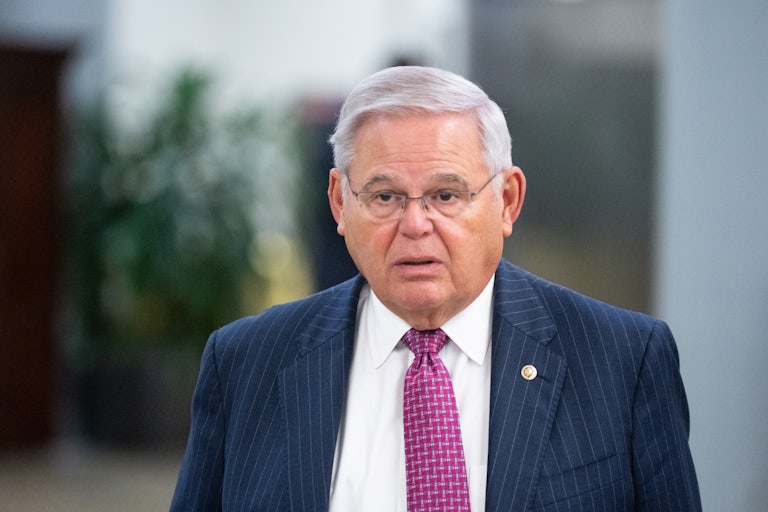
New Jersey Senator Bob Menendez has been indicted on federal bribery charges, the Department of Justice announced Friday.

The indictment alleges that Menendez, who is the chair of the Senate Foreign Relations Committee, and his wife, Nadine Menendez, received hundreds of thousands of dollars in cash, gold bars, and “luxury vehicle and home furnishings,” from three New Jersey businessmen.

In return for the bribes, Menendez reportedly used his office to send aid to the Egyptian military, “to pressure the Department of Agriculture to protect a business monopoly [one] contact had from Egypt,” per CNN, and to help other alleged bribers’ businesses. The “corrupt relationship” detailed in the indictment spanned from 2018 to 2022.

Menendez and his wife did little to hide their allegedly ill-begotten gains, despite the fact that the New Jersey senator had previously been indicted on similar charges in 2015—although Menendez was let off the hook after the jury failed to return a verdict. “Over $480,000 in cash—much of it stuffed into envelopes and hidden in clothing, closets and a safe—was discovered in the home,” according to the indictment.

Envelopes of cash were allegedly discovered hidden inside jackets that literally had Menendez’s name on them. Additionally, the gold bars that were discovered at Menendez’s home had serial numbers, making them traceable.

Another $70,000 in cash was allegedly found in an envelope in Nadine Menendez’s safety deposit box. According to the indictment, the envelope containing the cash had fingerprints from Fred Daibes, one of the three businessmen implicated in the indictment, or his driver. Menendez didn’t even bother to switch the envelope after he received the payment.

Menendez has been under investigation for a year led by the U.S. attorney for the Southern District of New York, Damian Williams.

The charges are significant. They also undercut numerous allegations made by Donald Trump and others that the numerous federal charges he is currently facing are a heinous plot meant to undermine his surging presidential campaign.

The Clarence Thomas Corruption Saga Just Got Even Worse

A new ProPublica report reveals deep, unethical connections between the Supreme Court justice and the Koch brothers.

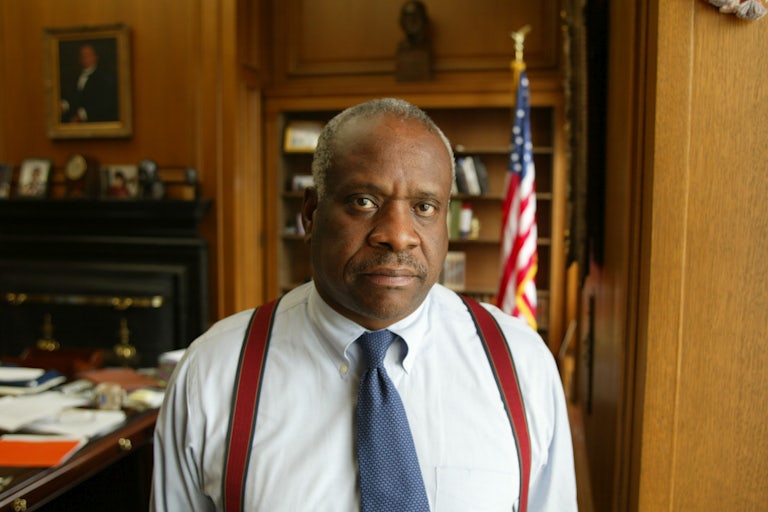
Supreme Court Justice Clarence Thomas stands in his office.
Photo by David Hume Kennerly/Getty Images
Supreme Court Justice Clarence Thomas

Clarence Thomas has secretly participated in events for the Koch donor network for at least a decade, despite the fact that the group has brought cases before the Supreme Court, according to a bombshell new ProPublica report.

“I can’t imagine—it takes my breath away, frankly—that he would go to a Koch network event for donors,” John E. Jones III, a retired federal judge appointed by George W. Bush, told ProPublica. “What you’re seeing is a slow creep toward unethical behavior. Do it if you can get away with it.”

The Koch network is one of the biggest and most influential political organizations in the United States. Over the past 50 years, brothers Charles and David Koch have helped bring about the rise of the Tea Party and sought to slash government regulatory agencies such as the Environmental Protection Agency.

The first mention of Thomas in connection with the Koch network, recently rebranded as Stand Together, was in 2010, when donors received an event invitation that said the Supreme Court justice had spoken at a previous summit.

He also spoke at an event in 2018, when he was flown in on a private jet. In now classic Thomas fashion, he revealed none of these connections on his financial disclosure forms. It is unclear who paid for the private jet that took him to the 2018 fundraising event. But all of his appearances were arranged with the help of dark-money king Leonard Leo.

Aside from appearing at Koch network events as a draw to donors, Thomas has also interacted more personally with the Koch brothers for a long time at the Bohemian Grove, which ProPublica describes as a “secretive all-men’s retreat in Northern California” that attracts major corporate and political players.

Thomas has attended Bohemian Grove retreats for more than two decades as a guest of his longtime, increasingly problematic friend Harlan Crow. It costs thousands of dollars for a member to bring a guest to the Grove, but witnesses told ProPublica that Thomas was there almost every year. He did not disclose many of those trips.

Crow, a Republican billionaire megadonor and Nazi memorabilia collector, has repeatedly lavished Thomas with expensive gifts. These include island-hopping yacht vacations, private school tuition for Thomas’s nephew, and buying and renovating a Thomas family property, where Thomas’s mother still lives.

During the period when Thomas has been documented spending time with the Koch network, his position on government regulation has shifted dramatically. The most significant example is the 1984 case of Chevron v. NRDC, which found that government agencies are responsible for determining the rules that put laws into effect.

The Koch network has repeatedly challenged this precedent over the years. Thomas wrote the majority opinion in a 2005 case that expanded the protections from Chevron. By 2020, he had rejected his own opinion as unconstitutional.

In the upcoming Supreme Court term, the justices will hear a case that could overturn the Chevron precedent. Thomas’s shocking switch could help deliver the Koch network a major victory.

“What we’re seeing emerge is someone who is living his professional life in a way that’s seeing these extrajudicial opportunities as a perk of the office,” Charles Geyh, a judicial ethics expert at Indiana University law school, said to ProPublica about Thomas. “There’s a culture of impartiality that’s really at risk here.”

Ex-White House Aide Reveals Why Trump Refused to Wear Mask During Covid

Cassidy Hutchinson explains why Donald Trump would never wear masks, even during the height of the pandemic.

Al Drago/Bloomberg/Getty Images

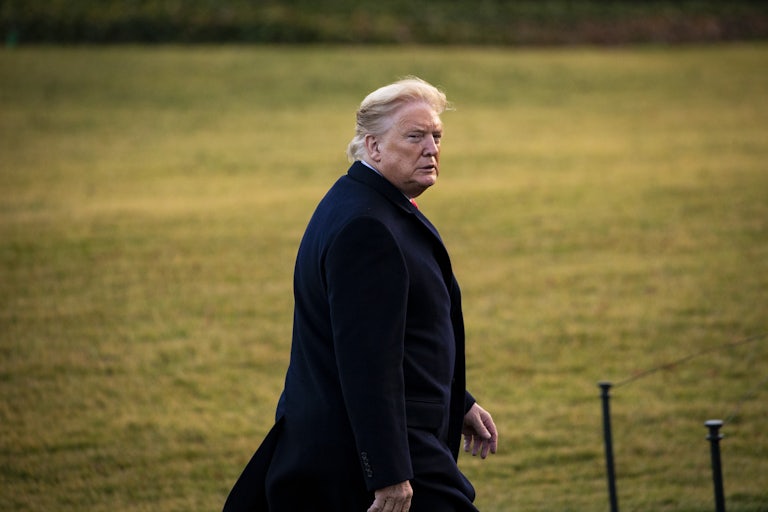
Donald Trump staunchly refused to wear a mask during the peak of the Covid-19 pandemic, and a big reason why is that he didn’t want to smudge his makeup, former White House aide Cassidy Hutchinson has revealed.

Hutchinson worked as the top assistant to Donald Trump’s chief of staff Mark Meadows, and she eventually became a star witness for the House January 6 investigative committee. She reveals Trump’s turning point on masks in her new book Enough, The Guardian reported Thursday.

Trump toured a Honeywell mask-making factory in May 2020, and he sparked criticism for not wearing a mask during the tour. He told reporters he chose not to after the Honeywell chief executive gave him the go-ahead.

But Hutchinson writes that Trump initially chose to wear a white mask, and then asked staffers what they thought.

“I slowly shook my head,” Hutchinson says. “The president pulled the mask off and asked why I thought he should not wear it.”

“I pointed at the straps of the N95 I was holding. When he looked at the straps of his mask, he saw they were covered in bronzer.”

Trump immediately decided to forgo the mask, according to Hutchinson, who wrote, “‘Why did no one else tell me that?” he snapped. “I’m not wearing this thing.”

Trump has regularly been mocked for his distinct orange complexion. People often speculate whether he uses makeup or fake tan to get his skin to that particular shade.

Trump’s refusal to wear a mask backfired spectacularly, and he tested positive for Covid on September 26, 2020. He and Meadows hid his diagnosis for several days and didn’t announce it publicly until October 2. Those six days were just enough time for Trump to infect Chris Christie.

Christie said in December 2021 that it was “undeniable” Trump had given him Covid. He also blasted Meadows for not warning anyone that Trump was sick.

I would have worn a mask if I knew that,” Christie told PBS. “[Meadows] didn’t tell us.”

“I went into the hospital in the intensive care unit. He didn’t call and tell me. So I think that’s inexcusable.”